
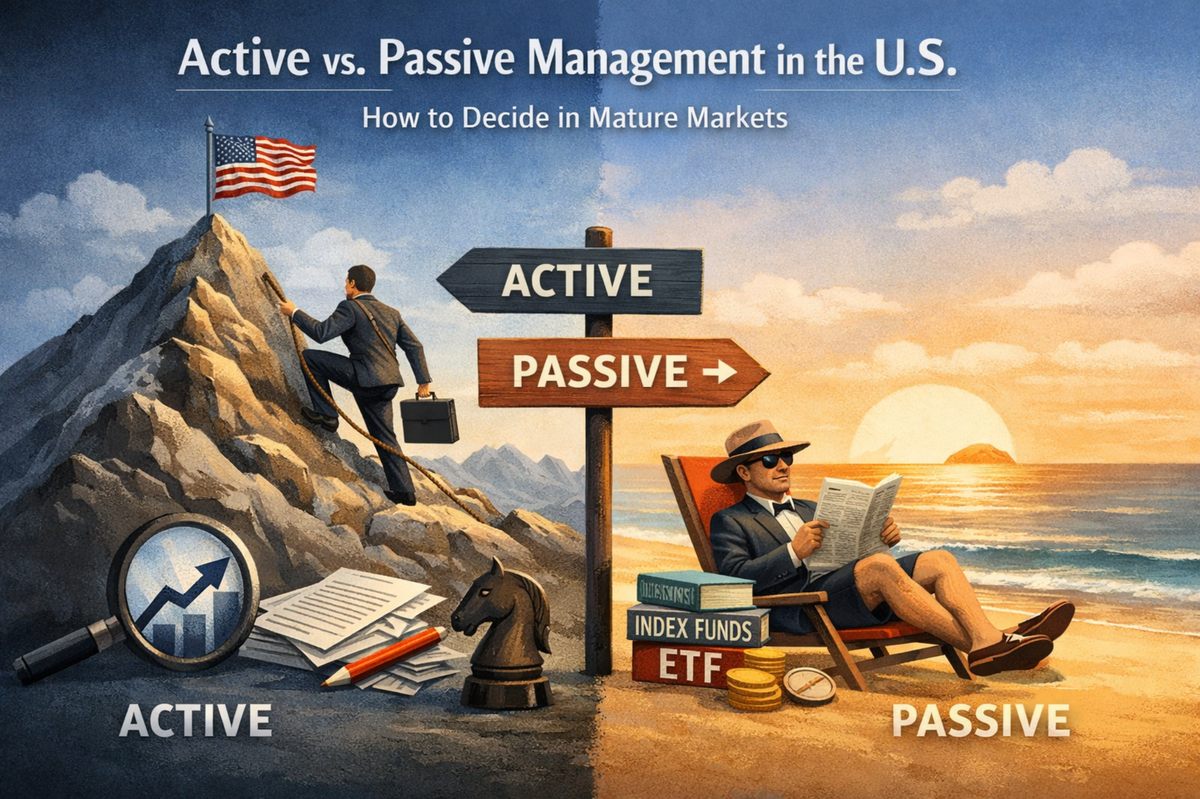
In the world of investments, choosing between active and passive management has become a pivotal decision for many investors, especially those navigating the complexities of mature U.S. markets. Both approaches offer distinct advantages and challenges, demanding careful consideration to align with one’s financial goals and risk tolerance.
Understanding the nuances of these strategies is essential for making informed decisions that can impact long-term financial success, especially in mature markets where efficiency, costs, risk management, and consistency of returns play a decisive role in shaping investment outcomes over time.
Active management: Pros and Cons
Active management involves a hands-on approach where fund managers select stocks, bonds, or other securities in an attempt to outperform market indices. Proponents of this method argue that skilled managers can identify undervalued assets and capitalize on market inefficiencies. This strategy, however, comes with higher fees due to the expertise required and the resources involved in research and analysis.
Investors considering active management must weigh the potential for superior returns against these higher costs and risks. When undertaken by seasoned professionals with a track record of success, active management can add significant value, particularly in volatile or inefficient markets.
Passive management: Benefits and Limitations
Contrastingly, passive management is grounded in a long-term strategy of mirroring a market index, such as the S&P 500. This approach offers lower fees due to its less intensive strategy, making it attractive for cost-conscious investors. By eliminating the challenges of frequent trading and extensive research, passive funds often perform in line with their benchmarks, making them reliable choices for those seeking steady, market-matching returns.
Despite these advantages, passive management may not capitalize on market periods of high growth. The absence of active decision-making means that these funds will not outperform during rising markets, nor will they mitigate losses during downturns. For investors prioritizing stability and low costs, this approach aligns well with a long-term focus on accumulation rather than speculative, short-term gains.
Finding a balance for your portfolio
Ultimately, the decision between active and passive management should align with individual financial goals, risk tolerance, and investing horizon. Many investors find a balance by including a mix of both strategies in their portfolios. This blended approach can harness the strengths of active management while benefiting from the cost-efficiency of passive funds.
As the market continues to evolve, investors must remain vigilant and adaptable, reevaluating their strategies to ensure alignment with changing financial landscapes. By understanding the unique advantages and constraints of each method, investors can make more informed decisions that cater to their specific needs.
👉 Also read: Small Caps In The U.S.: When They Make Sense In Diversified Portfolios